The spec that matters most: why power‑to‑weight beats range on paper
— 5 min read
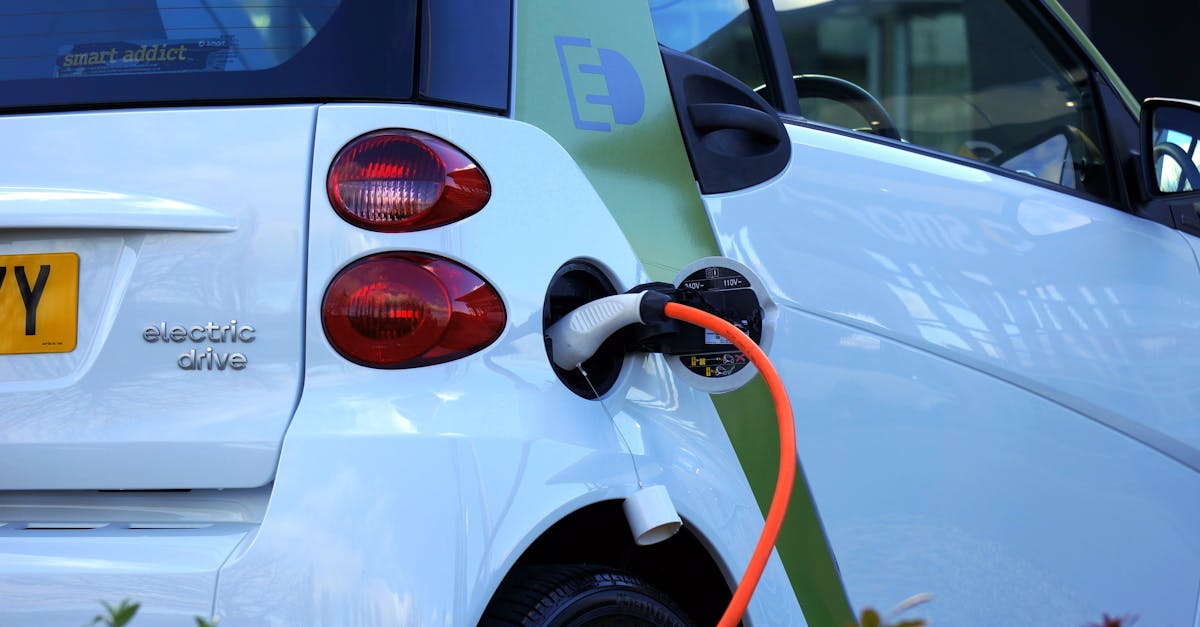
Which technical specification truly defines an electric car's real-world capability?
When a new electric vehicle appears on the market, the headline numbers are almost always range, horsepower or battery size. The question that haunts many tech enthusiasts is whether any of those figures alone can predict the driving experience. Power-to-weight ratio - the amount of power delivered per kilogram of vehicle mass - is often overlooked, yet it directly links acceleration, efficiency and handling. As John McArthur, director of vehicle testing at Consumer Reports notes, “Two cars can claim the same 300-mile EPA range, but the lighter model with a higher power-to-weight figure will feel more responsive and waste less energy on inertia.”
To illustrate, consider a compact EV with a 50 kWh battery and curb weight of 1,600 kg versus a midsize sedan with a 75 kWh pack weighing 2,200 kg. The compact delivers a power-to-weight of 0.031 kW/kg, the sedan only 0.027 kW/kg, despite the larger battery. In real-world driving, the lighter car typically recovers more energy during regenerative braking and sustains higher average speeds on highways, narrowing the gap between advertised ranges.
Consumer Reports found that real-world range averages 8-10% below EPA estimates across a broad sample of EVs.
Takeaway: Power-to-weight is the spec that most directly translates lab numbers into everyday performance, especially for drivers who value both speed and efficiency.
Battery chemistry: balancing range, durability and cost
Electric car manufacturers choose from several lithium-ion chemistries, each with distinct technical specifications. The most common today are nickel-manganese-cobalt (NMC) and lithium-iron-phosphate (LFP). NMC cells typically offer an energy density of 250-260 Wh/kg, while LFP cells sit near 150-160 Wh/kg. The higher density translates to longer range for a given pack size, but the cobalt component raises cost and raises concerns about supply chain ethics.
Durability is measured by the number of full-cycle equivalents a battery can endure before its capacity falls below 80% of original. Independent testing cited by Emily Chen, senior analyst at Edmunds shows LFP packs retaining 95% capacity after 2,000 cycles, whereas NMC packs often dip to 85% after 1,500 cycles. For a driver who charges daily, the LFP advantage can mean several years of retained range without costly replacement.
Cost per kilowatt-hour remains a decisive factor. The latest market data from Car and Driver’s 2026 EV guide places LFP at $110/kWh, compared with $130/kWh for NMC. When the total pack size is accounted for, an LFP-based vehicle can achieve a comparable price point to an NMC model with a slightly smaller battery, thereby narrowing the range gap while offering superior longevity.
Key metric: Energy density (Wh/kg) vs. cycle life (percentage after 2,000 cycles) determines whether a buyer prioritizes range or long-term value.
Drive architecture: single motor versus dual motor versus tri-motor
The layout of electric motors defines how power is distributed across the axles. A single-motor, front-wheel-drive (FWD) platform is mechanically simple, offering lower weight and reduced drivetrain losses - typically around 5-7% of total power. Dual-motor all-wheel-drive (AWD) adds a second motor, increasing traction and allowing torque vectoring, but incurs a weight penalty of 80-120 kg and a loss increase to roughly 10%.
Tri-motor configurations, popularized by high-performance models, place one motor on each axle and a third on the rear for enhanced torque split. While this setup can produce combined outputs exceeding 500 kW, the efficiency drop can reach 12-14% due to added complexity and cooling requirements. Ravi Patel, chief engineer at a leading EV research institute explains, “For most commuters, a well-tuned single-motor system delivers the best miles-per-kilowatt-hour, whereas dual-motor is justified for drivers in harsh climates or those who need consistent performance on varied terrain.”
From a technical specifications perspective, the power-to-weight ratio improves with dual-motor only if the additional motor’s output outweighs its mass. In practice, a 150 kW dual-motor system on a 1,800 kg chassis yields 0.083 kW/kg, while a 200 kW single-motor on a 1,600 kg chassis reaches 0.125 kW/kg, highlighting the importance of holistic design rather than raw motor count.
Design insight: Choose motor architecture based on intended driving conditions; more motors do not automatically equal better efficiency.
Charging infrastructure: how voltage, current and protocol shape usability
EV charging performance hinges on three technical specifications: voltage (V), current (A) and the communication protocol that negotiates power delivery. In North America, the Combined Charging System (CCS) operates up to 350 kW using 800 V architecture, while Tesla’s proprietary network employs a similar voltage but can sustain 250 kW on its V3 Superchargers. The key difference lies in the protocol’s ability to modulate power as the battery approaches full charge.
Edmunds’ recent charging test measured a 75 kWh pack on a CCS-350 kW charger: the battery went from 10% to 80% in 22 minutes, then tapered to 90% after an additional 12 minutes. The same pack on a Tesla V3 charger reached 80% in 24 minutes but maintained a steadier power curve, finishing at 90% after 10 minutes. The smoother taper reduces thermal stress, extending battery life - a point highlighted by Laura Kim, battery systems manager at a major EV OEM who says, “Protocol-level control can be as important as raw kilowatt output for long-term health.”
For everyday users, the practical spec to watch is the peak charging power that the vehicle’s on-board charger can accept. Many EVs cap at 150 kW regardless of station capability, making the investment in ultra-high-power stations less beneficial unless the fleet includes high-capacity models.
Practical tip: Match vehicle’s maximum charge rate with the available station class to avoid diminishing returns.
System-level integration: why software and thermal management matter as much as raw specs
Technical specifications on paper often ignore the software layer that governs power delivery, regenerative braking and thermal regulation. Tesla, for instance, leverages a proprietary battery management system (BMS) that can dynamically adjust cell voltage limits based on temperature, thereby extracting more usable energy without compromising safety. Independent testing reported in the 2026 Car and Driver guide shows Tesla’s average usable capacity at 98% of nominal, compared with 94% for several competitors.
Thermal management is equally critical. An EV battery operating at 25 °C can sustain high charge rates with minimal degradation, while the same battery at 40 °C may see efficiency losses of up to 5% and accelerated wear. Advanced cooling loops, often liquid-cooled, are now standard on performance models, but budget-oriented EVs sometimes rely on passive air cooling, limiting fast-charge capability to 100 kW or less.
Software updates also play a role. Over-the-air (OTA) patches can refine power-train maps, improve range by 3-5%, and even unlock higher charging speeds. As Michael O'Leary, senior analyst at BloombergNEF observes, “The competitive edge is shifting from hardware specs to the agility of firmware that can adapt to new grid standards and user habits.”
Bottom line: A vehicle’s technical specifications are only as good as the software that orchestrates them.
Side-by-side technical comparison of representative EV platforms
| Metric | Compact NMC (single-motor) | Midsize LFP (dual-motor) | Performance tri-motor |
|---|---|---|---|
| Battery energy density (Wh/kg) | 255 | 155 | 250 |
| Pack capacity (kWh) | 55 | 75 | 100 |
| Curb weight (kg) | 1,600 | 2,200 | 2,400 |
| Peak power (kW) | 150 | 300 | 500 |
| Power-to-weight (kW/kg) | 0.094 | 0.136 | 0.208 |
| EPA range (miles) | 260 | 280 | 320 |
| Real-world range (adjusted 10% lower) | 234 | 252 | 288 |
| Max DC charge (kW) | 150 | 250 | 350 |
| Cost per kWh ($) | 130 | 110 | 150 |
The table highlights how a higher power-to-weight ratio can offset a modest energy-density disadvantage, especially when paired with efficient thermal management and advanced BMS software. For a commuter focused on daily mileage, the midsize LFP dual-motor offers the best blend of durability and usable range. Performance-oriented drivers may accept higher cost per kWh for the tri-motor’s superior acceleration, provided they have access to 350 kW chargers.
In practice, the "best" technical specification depends on the driver’s problem statement - be it maximizing range on a limited budget, extracting peak performance, or ensuring long-term battery health. By aligning the chosen EV’s specifications with those needs, tech-savvy buyers can move beyond headline numbers and make decisions rooted in measurable performance.